

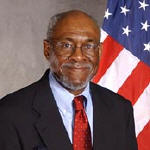
The situation in Africa’s Great Lakes region has improved and the United States remains “dedicated to doing what we can to keep that positive momentum going,” the State Department’s senior diplomat for African affairs told the U.S. Congress May 25.
In testimony before the House of Representatives Foreign Affairs Subcommittee on Africa and Global Health, Assistant Secretary of State for African Affairs Johnnie Carson said central to those efforts is improving the situation in the eastern part of the Democratic Republic of the Congo (DRC), “where the continuing presence of armed groups has been exacerbated by the lack of state authority.” The assistant secretary was on Capitol Hill to brief lawmakers on the latest developments in the region.
The Democratic Republic of the Congo’s military, commonly referred to as FARDC (Forces Armées de la République Démocratique du Congo) is “ineffective and frequently abusive,” Carson told the lawmakers.
“The judicial and penal systems in the DRC are broken, and impunity rather than accountability reigns. Illegal natural resource exploitation funds armed gangs. Sexual and gender-based violence is at crisis levels, particularly in the eastern region. The Lord’s Resistance Army is perpetrating attacks against civilians in the northeastern Democratic Republic of the Congo and also in the Central African Republic. The U.N. mission in the Democratic Republic of the Congo, MONUC, is stretched to the limit.”
Carson said he met with DRC President Joseph Kabila on April 16 and expressed concern about the security vacuum that would result if MONUC left the DRC before the security situation in the east had dramatically improved and before local security services were sufficiently trained and able to protect civilians. “He was receptive to the concerns that I raised as well as the concerns that have been raised by the international community,” Carson said.
“President Kabila has taken important steps to address insecurity, but they remain insufficient,” Carson said. The president “has also voiced strong support for our program to train a light infantry battalion in Kisangani,” Carson added.
That training includes a strong focus on improving FARDC human rights practices, Carson said.
In late 2009 and early 2010, the United States sent assessment teams to the DRC to investigate the five issue areas that Secretary of State Hillary Rodham Clinton and Kabila identified for greater bilateral cooperation when they met in August 2009 in Goma. The five areas are security sector reform, sexual and gender-based violence issues, anti-corruption, governance, and agriculture and food security.
“We have received the recommendations of these teams, and are now pursuing with the Democratic Republic of the Congo’s government those recommendations that we believe can achieve the best short- and medium-term results.” Carson also said population movements need to be monitored because there are more than 1 million internally displaced people (IDPs) in the North Kivu province alone and 2 million displaced people nationwide.
As these IDPs and refugees in surrounding countries begin to return home, he warned, there is a potential for renewed conflict. There will also be increased demands for humanitarian assistance and limited capacity by the government of the Democratic Republic to provide it, he predicted.
Carson said the United States is looking ahead to national elections in the DRC in September 2011 and local elections a year later. “In my conversations with President Kabila last month, I stressed the importance of adhering to this democratic electoral calendar. The government has promised that the elections will be free, democratic and transparent. We hope that this will be the case.”
Turning to Rwanda, Carson said the August presidential elections are expected to be peaceful and nonviolent, but he said the security environment ahead of that vote is a cause for concern. “Recent grenade attacks in Kigali have caused numerous casualties as well as anxiety and unease in the civilian population. We strongly condemn those attacks,” he said.
The United States also has concerns about recent acts by the Rwandan government, he said, which appear to be attempts to restrict freedom of expression. The actions include “suspending the licenses and activities of two newspapers, reversing the work permit of a Human Rights Watch researcher, and arresting and later releasing on bail the opposition leader, Victoire Ingabire. Two political parties, the Green Party and FDU Inkingi Party, have been unable to register.”
The United States has urged senior Rwandan government officials to respect the freedoms of expression, press, association and assembly, he said. “We have stressed that the international and domestic NGOs [nongovernmental organizations] and media should be allowed to operate and report freely in Rwanda. We have also called for due process and a fair and speedy trial for Victoire Ingabire.”
“Overall, long-term stability in Rwanda is best promoted by democratic governance and a respect for human rights. Rwanda and its regional and international partners must work together to achieve the free, fair and peaceful election that the people of Rwanda deserve,” he said.
Carson said “our hope is the same” for Burundi, “which has just held the first in a series of five elections for local and national-level institutions. We have undertaken numerous public and private efforts to reinforce the message that credible elections are necessary for long-term stability, economic growth and the growing partnership between the government of Burundi and the United States.”

Related articles
- • Ebola outbreak declared an international Public Health Emergency (July 17, 2019)
- • Felix Tshisekedi Sworn In as DR Congo President (January 24, 2019)
- • Constitutional Court Declares Tshisekedi Winner of Presidential Election (January 19, 2019)
- • Felix Tshisekedi Vows to Be the President of All Congolese (January 10, 2019)
- • Felix Tshisekedi Elected DR Congo President (January 10, 2019)
- • DR Congo Delays Results of December Election (January 6, 2019)
- • At least 30 dead after massacres in Ituri (March 2, 2018)
- • Botswana Urges Joseph Kabila to Step Down (February 26, 2018)
- • No elections in DR Congo in December without electronic voting machines: INEC (February 13, 2018)
- • US Warns DR Congo Against Electronic Voting for Delayed Election (February 12, 2018)
- • Felix Tshisekedi accuses INEC of illegally prolonging Kabila's mandate (October 24, 2017)
- • DRC Seeks Arrest of Presidential Candidate Moise Katumbi (May 19, 2016)
- • Papa Wemba Is Buried in Kinshasa (May 4, 2016)
- • Papa Wemba Awarded Highest National Honor as Thousands Pay Tribute (May 2, 2016)
- • Peacekeepers, Congo Army to Resume Joint Fight Against Rwandan Rebels (January 28, 2016)
- • Political tensions 'running high' in DR Congo ahead of 2016 elections (October 7, 2015)
- • UN Report Blames Ugandan Islamists for 237 Killings in DR Congo (May 14, 2015)
- • Rights Groups: DR Congo Must Free Pro-democracy Activists (April 13, 2015)
- • DRC Army Putting Pressure on FDLR (April 1, 2015)
- • Police Open Fire on Crowd Protesting Election Law Change (January 19, 2015)
- • ICC Case Against Bemba Wrapping Up as Another Opens (November 12, 2014)
- • Denis Mukwege Wins Sakharov Prize 2014 (October 21, 2014)
- • Etienne Tshisekedi Evacuated to Belgium for Medical Treatment (August 16, 2014)
- • Senior UN officials urge Brazzaville to halt expulsion of DR Congo nationals (May 26, 2014)
- • Kerry Calls on Kabila to Honor Constitution (May 4, 2014)
- • Kerry in DR Congo for Security Talks (May 3, 2014)
- • Security Council extends UN mission, intervention force in DR Congo for one year (March 28, 2014)
- • U.S. sending more personnel to Uganda to hunt LRA leader Joseph Kony (March 24, 2014)
- • DR Congo Takes Chairmanship of COMESA at Summit in Kinshasa (February 26, 2014)
- • Bosco Ntaganda Attacked Civilians on Ethnic Grounds, ICC Prosecutor Says (February 10, 2014)